Screen Watching and Trading: Breaking the Ticker Addiction
The Trap of the Glowing Monitor
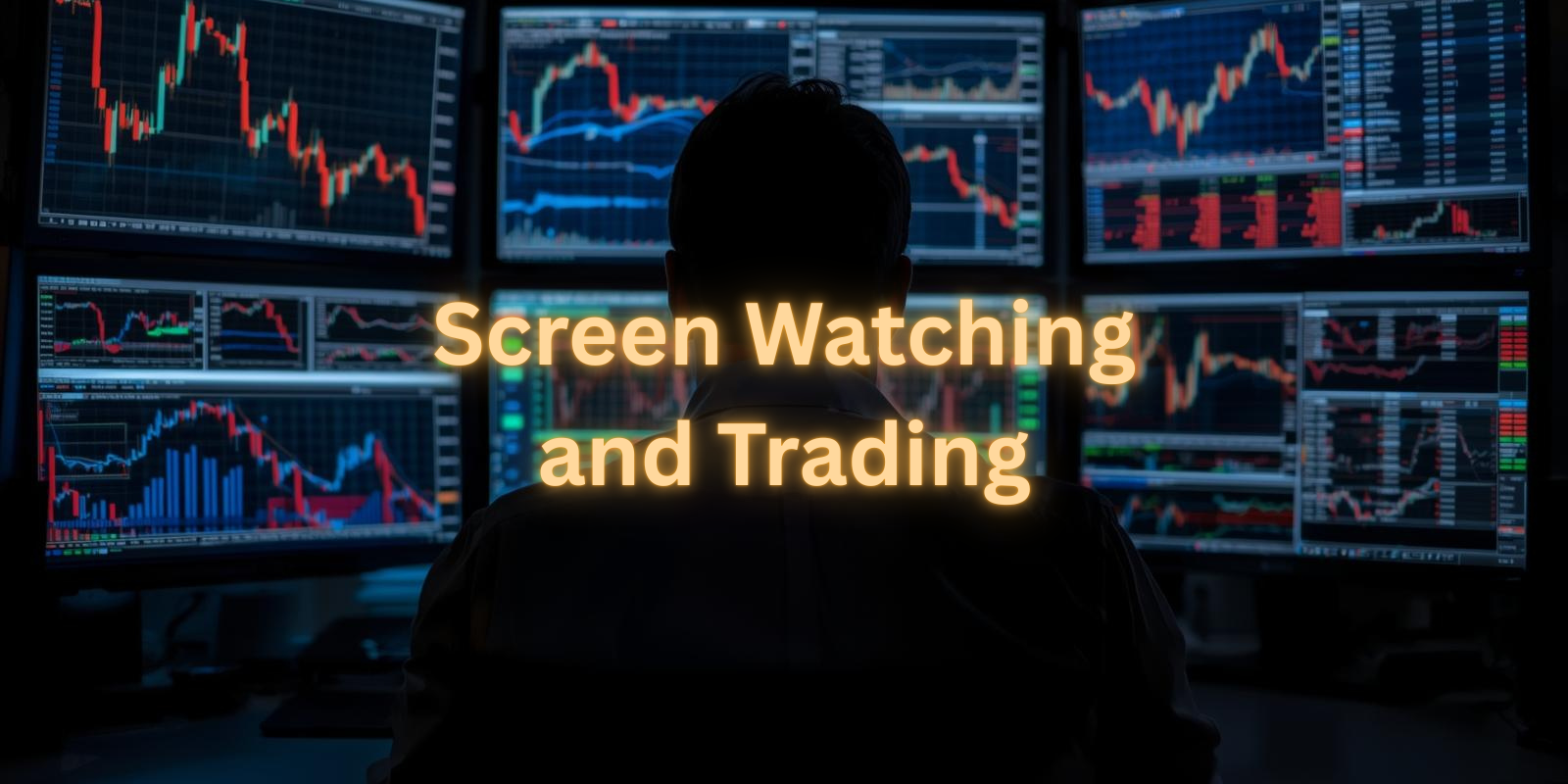
Many traders believe that the more they watch the market, the better they will perform. They sit for hours, staring at every minor price fluctuation. However, this habit is often a sign of insecurity rather than diligence. This behavior is known as Screen Watching and Trading. While it feels like work, it is actually a form of psychological torture that destroys your objectivity.
At Maverick Trading, we have spent over 20 years managing professional traders. We have found that the most successful traders spend the least amount of time staring at live charts once a trade is active. Conversely, struggling traders often feel they can “will” the price to move by watching it. This post explores why we succumb to this habit and how you can break free to improve your long-term results.
The Neurochemistry of the Ticker
Why is Screen Watching and Trading so addictive? The answer lies in your brain’s dopamine system. Every time a price tick moves in your favor, your brain receives a tiny hit of dopamine. This is the “reward” chemical. However, every time the price moves against you, your brain experiences a surge of cortisol.
Consequently, staring at the screen turns trading into a high-stakes video game. You become a “dopamine junkie,” chasing the high of a green candle. This constant chemical cycling leads to decision fatigue. By the time a real trading signal appears, your brain is too exhausted to act rationally. Therefore, the more you watch, the more likely you are to make an emotional mistake.
Why Watching Every Tick Ruins Your Strategy
When you engage in Screen Watching and Trading, you lose sight of the “big picture.” Most trading strategies are based on higher timeframes, such as the hourly or daily charts. However, when you watch a 1-minute chart, every minor pullback looks like a catastrophic reversal.
For instance, a stock might be in a healthy uptrend on the daily chart. But, if you are screen watching, a tiny 0.5% dip can trigger a panic response. You might exit a winning trade prematurely just to stop the “pain” of watching the red candles. Subsequently, you watch in frustration as the stock hits your original target without you. Staring at the screen forces you to trade the “noise” rather than the “trend.”
The Illusion of Control
Screen Watching and Trading is fundamentally about a lack of trust. You do not trust your stop-loss, and you do not trust your edge. By watching the screen, you feel like you are in control. You feel that you can react “faster” if something goes wrong.
In reality, the opposite is true. When you are in a high-arousal state from screen watching, your prefrontal cortex—the part of the brain responsible for logic—shuts down. You become reactive. Consequently, you are more likely to move your stop-loss or “average down” on a losing position. These are the exact behaviors that lead to blown accounts. Professional trading requires you to set your parameters and then let the market do the work.
The “Observer Effect” in Trading
In physics, the observer effect states that the act of observing a phenomenon changes the phenomenon. In Screen Watching and Trading, the act of observing your P&L changes your behavior. When your eyes are glued to the fluctuating dollar amount, you stop trading the chart and start trading your bank account.
This leads to “P&L Watching,” which is the most dangerous sub-set of screen watching. If you see your profit go from $500 down to $400, your brain perceives that $100 difference as a physical loss. Therefore, you feel a need to “get it back.” This emotional attachment to unrealized gains is a primary cause of revenge trading. To succeed, you must detach your self-worth from the flashing numbers on the screen.
Practical Strategies to Stop Screen Watching
Breaking the habit of Screen Watching and Trading requires a change in your daily routine. Here are the tactical steps we recommend at Maverick Trading:
1. Set and Forget with Hard Alerts
Instead of watching the price, use price alerts. Set an alert for your profit target and an alert for your stop-loss. Once these are set, close your trading platform. Consequently, you will only return to the screen when the market requires your attention. This restores your mental clarity and reduces stress.
2. Move to Higher Timeframes
If you find it impossible to stop Screen Watching and Trading on a 5-minute chart, move to a 4-hour or Daily chart. Higher timeframes have less “noise.” When the candles take hours to form, there is no benefit to watching them tick by tick. This shift forces you to become a strategic investor rather than a reactive gambler.
3. Implement the “Walk Away” Rule
After you place a trade, you must physically leave your desk for at least 30 minutes. Go for a walk, grab a coffee, or work on a different task. This physical distance breaks the dopamine loop. By the time you return, the initial adrenaline of the entry will have faded. Therefore, you will be able to manage the trade with a cool head.
Building a “Professional Environment”
Your physical environment often encourages Screen Watching and Trading. If you have four monitors all flashing different charts, your brain will stay in a state of high alert.
Furthermore, many traders keep news feeds running 24/7. As we discussed in our post on news cycles, this constant input creates unnecessary anxiety. Simplify your workspace. Use one or two screens maximum. Turn off the flashing “ticker tapes.” By creating a calm environment, you make it easier for your logical brain to stay in charge.
Data Spotlight: Time at Screen vs. Profitability
At Maverick Trading, we have observed a surprising correlation: traders who spend more than 6 hours a day “watching” the market often have lower win rates than those who spend 2 hours.
| Trading Habit | Avg. Time at Screen | Psychological State | Performance |
| The Watcher | 8+ Hours | Anxious / Fatigued | Low |
| The Gambler | 6 Hours | High Arousal / Impulsive | Volatile |
| The Professional | 1-3 Hours | Calm / Objective | Consistent |
This data shows that Screen Watching and Trading is a case of diminishing returns. The more time you spend staring at the charts, the more likely you are to over-trade or “tinker” with a perfectly good strategy.
Reclaim Your Edge and Your Life
Trading should provide freedom, not a new form of imprisonment. Screen Watching and Trading turns you into a slave to the ticker. It drains your energy, ruins your health, and destroys your performance. By trusting your system and walking away from the screen, you regain your professional edge.
At Maverick Trading, we teach our members that the best trade management often involves doing nothing at all. Set your plan, trust your stops, and let the market decide the outcome. Your P&L will thank you, and so will your peace of mind.
To see our full breakdown of how screen watching leads to repetitive trading mistakes, watch our video here: https://youtu.be/88KWHRpm1hE. We discuss the psychological toll of the “ticker” and how to build a routine that supports long-term success.
More on Trading Psychology
Take the Trader Personality Test
Read:
Psychological Traits of Top Traders: 8 Key Traits You Need to Succeed
10 Essential Skills Every Profitable Trader Must Master
Top 12 Habits of Successful Traders
How to Get Started Trading Options
Disclaimer: This content is provided for educational and informational purposes only. It does not constitute, and should not be relied upon as, personalized investment advice, a recommendation to buy or sell any security, or an offer to participate in any trading activity. Trading involves substantial risk, and past performance is not indicative of future results.