Regret in Trading: How to Stop Living in the Past
The Ghost of the “Should Have” Trade
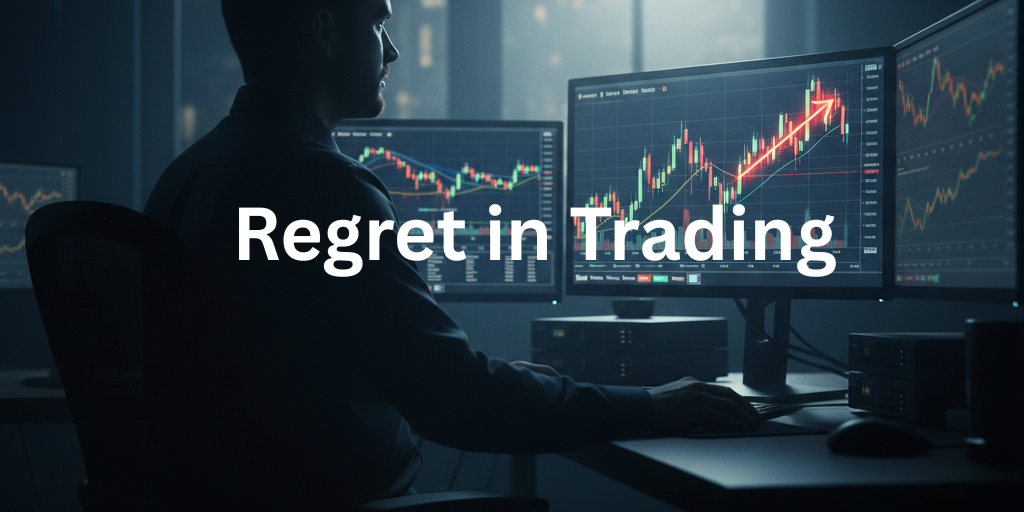
Every trader has a story about the one that got away. Perhaps you sold too early, or maybe you didn’t buy the dip when you had the chance. This feeling of Regret in Trading is a powerful emotional weight. It pulls your attention away from the current market. Consequently, it anchors your mind to the past. At Maverick Trading, we know that Regret in Trading is more than just a bad feeling; it is a functional impairment. When you are busy regretting yesterday’s move, you are blind to today’s opportunity. This post explores how to break the cycle of Regret in Trading to become a more effective professional.
Identifying the Two Primary Forms of Regret in Trading
To manage your emotions, you must understand the two ways this bias manifests. Generally, traders experience these in different ways depending on their personality and risk tolerance. Understanding these categories is the first step to overcoming Regret in Trading.
1. Regret of Action
This happens when you take a trade that loses. Afterward, you wish you hadn’t clicked the button. You feel reckless or foolish for following your plan when it resulted in a loss. Consequently, you might hesitate on the next valid signal because you fear repeating the mistake. This form of Regret in Trading causes “Analysis Paralysis” and can lead to long-term performance plateaus.
2. Regret of Inaction (FOMO)
This is the most common form of psychological distress. It occurs when you watch a stock move without you. You tell yourself, “I knew it was going to do that!” Because you didn’t participate, you feel a sense of loss. Therefore, you might “chase” the trade late just to stop the feeling. This specific type of Regret in Trading is a primary driver of poor execution and often results in buying at the absolute top of a move.
The Hindsight Bias Trap within Regret in Trading
The primary driver of Regret in Trading is hindsight bias. After a move happens, it looks obvious. Your brain “rewrites” history. It makes you believe you knew exactly what was coming. However, at the time of the trade, the outcome was an “Unknown Unknown.”
Therefore, you are judging your past self with information that you didn’t have at the time. This is an unfair comparison. Much of the pain in Regret in Trading stems from the belief that you could have controlled the outcome. In reality, you can only control your process. By judging yourself based on results instead of process, you trap yourself in a cycle of constant dissatisfaction.
How Past Mistakes Lead to Revenge Trading
Emotional baggage often acts as the “trigger” for even worse behaviors. For instance, if you suffer from Regret in Trading because you sold a stock too early, you might feel a need to “make up” for the missed profit. Consequently, you take a high-risk trade in a different stock to bridge the gap.
This is how one small instance of frustration turns into a large capital loss. You are no longer trading the market. Instead, you are trading your internal narrative. To be a professional, you must learn to “clean the slate” after every exit. To stop Regret in Trading, a trade that is over must stay dead. It should have no influence on your next decision. Mastering your reaction to the past is a form of essential emotional hygiene.
Breaking the Cycle of Performance Remorse
If you want to stop the cycle, you must change how you view “missed” money. Most traders think of missed profits as money “lost” from their account. This is a logical fallacy that fuels Regret in Trading. Money you didn’t make was never yours.
At Maverick Trading, we teach our traders to view the market like a bus station. If you miss a bus, you don’t run after it down the highway. You simply wait for the next bus. Chasing the market is the equivalent of running after that bus and getting exhausted. By the time the next opportunity arrives, you are too tired to get on. Regret in Trading makes you chase buses you can’t catch.
Practical Strategies to Move Forward and Stop Regret in Trading
You can train your brain to let go of the past. Use these techniques to neutralize your emotions every day:
1. The “Trade Log” Reality Check
When you feel upset about a missed move, go back to your notes. Did your system actually give a signal? Often, you will find that the “obvious” trade wasn’t actually part of your plan. This proves that your Regret in Trading is based on a fantasy rather than your actual strategy.
2. Implement the “10-Minute Rule”
After you close a trade or miss a move, give yourself 10 minutes to feel the emotion. Write down exactly what you are feeling. Once the timer goes off, the emotion is officially expired. Consequently, you force your brain to return to the present moment and leave Regret in Trading behind.
3. Reframe Losses as “Insurance Premiums”
If you regret a losing trade that followed your rules, reframe it. A stop-loss is just an insurance premium. You pay it to stay in the game. You don’t regret paying for car insurance when you don’t have a crash. Therefore, you shouldn’t feel remorse or Regret in Trading over a stop-loss that protected your capital.
The Maverick Philosophy: Next Trade Best Trade
At Maverick Trading, our mantra is “Next Trade, Best Trade.” This means that the most important trade of your life is the one you haven’t taken yet. Dwelling on Regret in Trading is a form of mental friction. It slows down your execution. Furthermore, it clouds your judgment.
Professional traders treat every trade as an independent event. They know that a losing streak or a missed “moon shot” has no mathematical impact on the probability of the next setup. When you detach your identity from the past, you gain the freedom to trade the present. This is the only way to beat Regret in Trading permanently.
Looking Through the Windshield
Imagine trying to drive a car while staring only at the rearview mirror. You would eventually crash. Trading is the same. Living in the past keeps your eyes on where you’ve been. To survive, you must keep your eyes on the road ahead and ignore the pull of Regret in Trading.
Accept that you will miss moves. Accept that you will sell too early. These are the “Known Knowns” of the profession. Once you accept them, they lose their power over you. Focus on your next entry. Trust your process. Leave the past in the archives where it belongs.
To see our full video on Regret in Trading watch our video here.
More on Trading Psychology
Take the Trader Personality Test
Read:
Psychological Traits of Top Traders: 8 Key Traits You Need to Succeed
10 Essential Skills Every Profitable Trader Must Master
Top 12 Habits of Successful Traders
How to Get Started Trading Options
Disclaimer: This content is provided for educational and informational purposes only. It does not constitute, and should not be relied upon as, personalized investment advice, a recommendation to buy or sell any security, or an offer to participate in any trading activity. Trading involves substantial risk, and past performance is not indicative of future results.