Avoid Collective Trading Stupidity
Trading Psychology: When the Crowd Loses Its Mind
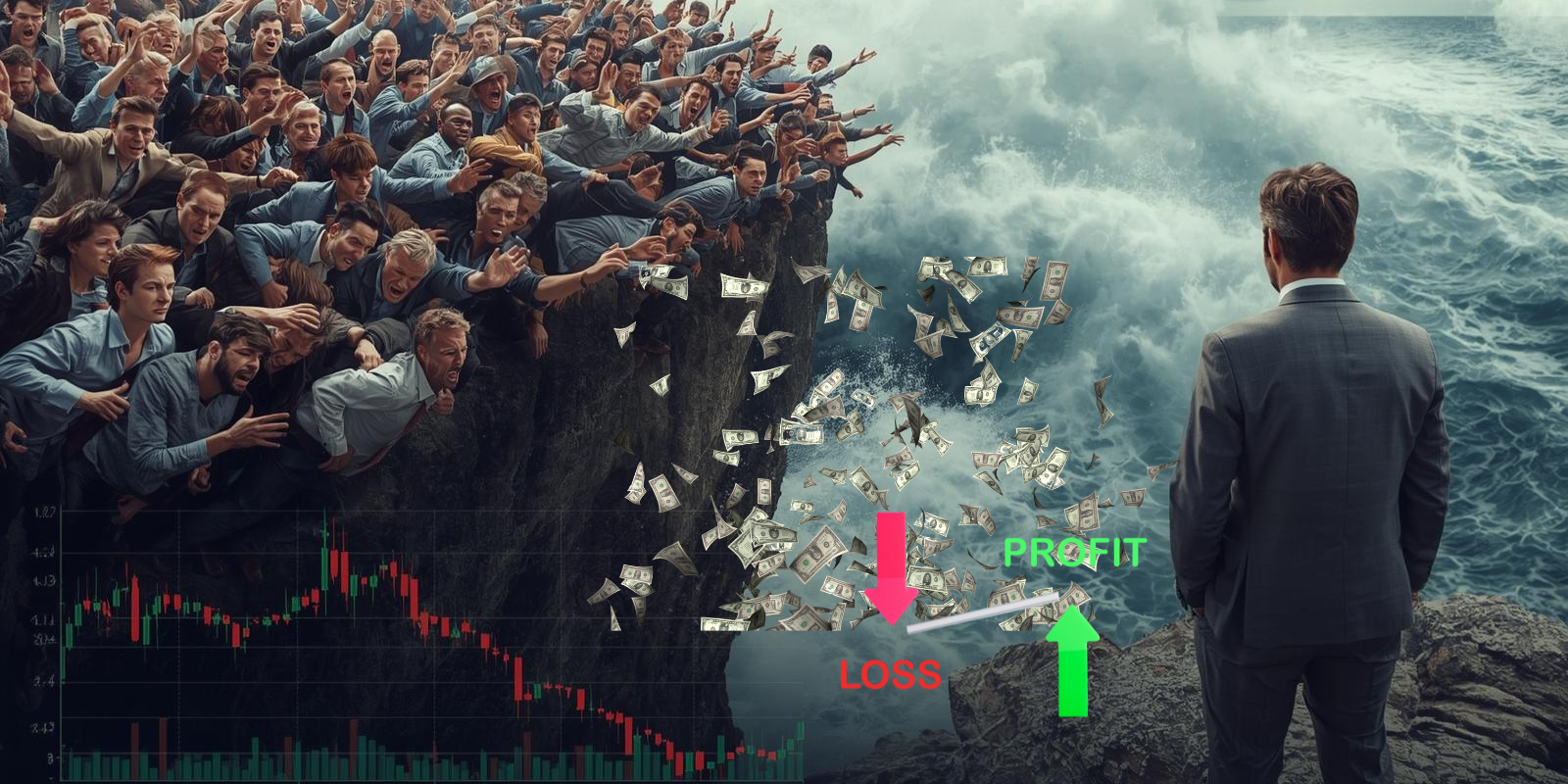
In the volatile landscape of financial markets, we often talk about individual biases—fear, greed, recency bias, and overconfidence. But what happens when these individual irrationalities combine, amplify, and sweep through the market like a contagion? This phenomenon is what we might starkly call Collective Trading Stupidity. It’s the alarming tendency for a group of otherwise rational individuals to make profoundly irrational decisions when acting as a collective, especially under conditions of uncertainty and high emotional pressure. This post will delve into the mechanisms behind this dangerous market dynamic and equip you with the insights to Avoid Collective Trading Stupidity.
The allure of the crowd is powerful. When everyone seems to be making money on a speculative asset, or panicking out of a declining market, it takes immense psychological fortitude to resist. This isn’t just “herd behavior”; it’s a step further, where the collective action leads to decisions that, in retrospect, appear utterly nonsensical. Think of historical bubbles and crashes—the Dutch Tulip Mania, the Dot-Com Bubble, or recent meme stock frenzies. These aren’t just market cycles; they are profound illustrations of human psychology succumbing to a dangerous groupthink. Your ability to recognize and navigate these periods of irrational exuberance or pervasive panic will be paramount to your long-term survival.
We’ve previously discussed herd behavior, but here we go deeper into the systemic vulnerabilities that lead to collective irrationality. The goal is not just to understand the crowd, but to transcend it. By dissecting the psychological drivers and practical implications, you’ll be better prepared to Avoid Collective Trading Stupidity.
The Origin and Clarity of “Collective Stupidity”
While the term “Collective Stupidity” is provocative, its origins lie in serious academic concepts that describe the failure of group rationality. It is used here as a potent metaphor for several related phenomena: Groupthink, Information Cascades, and The Wisdom of Crowds Failure.
1. Groupthink (The Original Sin)
The formal concept of Groupthink was coined by psychologist Irving Janis in 1972 to describe how groups, striving for conformity and consensus, often override realistic appraisals of alternative courses of action. While Janis studied foreign policy disasters, the application to financial markets is direct. Trading firms, online forums, and even casual investor groups can fall victim to Groupthink, where dissenting opinions about an asset’s valuation are suppressed to maintain harmony, leading to the collective decision to hold a wildly overvalued asset.
2. The Failure of the “Wisdom of Crowds”
The concept of the “Wisdom of Crowds” suggests that the collective average of many individual judgments is often more accurate than the judgment of any single expert. However, this wisdom requires independence of opinion. When traders begin to influence each other and rely on social proof (the essence of herd behavior), the judgments are no longer independent, and the crowd’s wisdom breaks down. It becomes a failure of averaging, leading directly to Collective Trading Stupidity. The crowd becomes one single, highly emotional entity.
3. Information Cascades (The Propagation Mechanism)
Nobel laureate economist Robert Shiller extensively documented how Information Cascades propagate market bubbles. This phenomenon, which contributes heavily to Collective Trading Stupidity, describes a situation where rational individuals, observing the actions of a sequence of previous actors, discard their own private information. If the first ten people buy an asset, the eleventh person assumes they have information she does not, so she buys too, even if her own analysis suggests caution. This cascade of non-independent, inferred decisions accelerates the market away from fundamental value, leading to mass irrationality.
Therefore, when we talk about how to Avoid Collective Trading Stupidity, we are referring to the conscious resistance against these three academic forces: Groupthink, the breakdown of the Wisdom of Crowds, and the rapid acceleration of Information Cascades.
Why You Must Avoid Collective Trading Stupidity
The danger of this phenomenon stems from its direct relationship with market timing. The crowd, by definition, is always late. It only enters a trend when the price action is so dramatic that it confirms what the trend setters already knew—meaning the move is near exhaustion.
-
Bubble Formation and Bursting: Collective trading stupidity is the fuel for speculative bubbles. As more people join a trend, they become convinced of its unending trajectory, driven by “greater fool theory” – the belief that someone even more foolish will buy at a higher price. When the narrative finally breaks, the collective panic leads to a crash, as everyone rushes for the exit simultaneously. The collective decision to buy at extreme highs, or sell at extreme lows, is a direct result of this phenomenon.
-
Narrative Overrides Fundamentals: During periods of collective trading stupidity, objective valuation and fundamental analysis are completely sidelined. The market is driven purely by emotion, anecdote, and a shared, often flawed, narrative. Traders become fixated on price action alone, ignoring underlying value or risk, convinced that “this time is different.” This environment is a graveyard for disciplined traders who fail to Avoid Collective Trading Stupidity.
To protect your capital, you must train yourself to identify the early warning signs of collective irrationality and develop robust personal strategies to Avoid Collective Collective Trading Stupidity. This requires a radical commitment to independent thinking, even when it feels incredibly uncomfortable.
The Neurobiology of the Crowd: Why Conformity Feels Safe
To understand how to Avoid Collective Trading Stupidity, we must look at the brain. Herd behavior isn’t a failure of willpower; it’s a deep-seated survival mechanism. Studies in neuroeconomics show that when an individual’s opinion differs from the group’s, the amygdala (the brain’s fear center) activates. The same areas of the brain light up when you are physically threatened or socially isolated. Conformity, therefore, gives a sense of safety and reduces cognitive dissonance.
When the price of a stock you own is plummeting, the pain is amplified by the knowledge that everyone else is panicking and selling. Your brain sees non-conformity (holding the asset) as a threat to your social and economic survival, triggering an intense urge to sell immediately, even if it locks in a massive loss. This fear-response completely bypasses the prefrontal cortex, the part of the brain responsible for logical, long-term decision-making.
Furthermore, when a parabolic rally is underway, the collective euphoria triggers massive dopamine releases. Joining the crowd feels like a shared, validated victory. The challenge to Avoid Collective Trading Stupidity is overcoming this powerful, immediate chemical reward in favor of the delayed, logical reward promised by your statistical edge.
The Psychological Mechanism of Collective Trading Stupidity
To successfully Avoid Collective Trading Stupidity, we must dissect its psychological components:
1. Social Proof and Validation
Humans are wired to seek validation from the group. When you see millions of other people participating in a massive market move, your brain interprets this as evidence that the action is correct and safe. Breaking this social proof instinct requires the active belief that your system’s objective data is superior to the collective emotional signal.
2. FOMO and the Pain of Omission
The fear of missing out (FOMO) is less about greed and more about the pain of omission—the regret of watching others profit while you sat on the sidelines. The moment you see a sharp move and think, “I should have been in that,” you are being primed by the crowd. This trigger often results in chasing the price, which is a key characteristic of Collective Trading Stupidity.
3. The Market’s Amplifying Feedback Loop
The trading herd is unique because it is self-amplifying. As momentum traders see the price move, they buy, which causes the price to move further, which triggers more emotional retail buying, creating a positive feedback loop that accelerates the trend far beyond what fundamentals justify. This cycle only breaks when the institutional sellers finally overwhelm the emotional retail buyers, leading to a catastrophic reversal. Understanding this loop is essential to learn how to Avoid Collective Trading Stupidity.
4. Illusion of Control
When panic or euphoria takes hold, many traders feel a sense of shared safety—the illusion that because everyone is buying, the buying must continue. This externalizes control. A disciplined trader internalizes control, knowing their only controllable variable is their own behavior.
To successfully Avoid Collective Trading Stupidity, you must constantly reinforce the fact that market consensus is a contrarian indicator.
Practical Strategies to Avoid Collective Trading Stupidity
Successfully navigating periods of collective irrationality demands a rigorous adherence to personal discipline and a commitment to objective, data-driven decision-making. Here are actionable strategies:
1. Cultivate Radical Independence of Thought
This is easier said than done. It requires consciously questioning consensus, especially when it feels overwhelmingly right.
-
Actionable Step: Develop an “inverse confirmation bias” checklist. When you find yourself strongly agreeing with the popular market narrative, make it a point to actively seek out counter-arguments and dissenting opinions. Read bear cases during a bull run, and bull cases during a market crash. This habit trains your brain to avoid collective trading stupidity by resisting the powerful pull of groupthink.
2. Implement “Anti-FOMO” Protocols
FOMO is a primary driver of collective stupidity. You must build friction against it.
-
Actionable Step: Use the “24-Hour Rule” for any trade idea inspired by significant market buzz (e.g., a meme stock surging, a sector suddenly parabolic). You are not allowed to act on that idea for 24 hours. During this period, you must objectively review if it meets your personal trading plan’s criteria. This delay allows emotional contagion to subside and logic to re-engage, helping you to avoid collective trading stupidity
3. Prioritize Risk Management Above All Else
During periods of collective trading stupidity, risk management is the first casualty. Traders chase returns and abandon their limits.
-
Actionable Step: Establish a non-negotiable Position Sizing Ceiling tied to your total equity, not your confidence level. For example, never risk more than 1% of your account on a single trade, regardless of how “certain” the herd makes you feel. Furthermore, implement an “Account Drawdown Limit” (e.g., if your account drops 5% in a single day, you stop trading for the remainder of the day/week). These hard stops are your last line of defense against emotional blow-ups driven by collective panic or euphoria, and crucial to avoid collective trading stupidity.
4. Rely on Objective Metrics, Not Sentiment
While sentiment indicators can signal extremes (as discussed in the previous post), you should not trade on sentiment, but rather use your own objective system.
-
Actionable Step: Your primary trading decisions must be based on quantifiable data from your trading system: price action, volume, technical indicators, and fundamental analysis that you have personally verified. Actively filter out news headlines, social media chatter, and anecdotal stories during your trading decision-making process. Let your system tell you what to do, not the crowd, in order to avoid collective trading stupidity.
5. Study Market History (Especially Bubbles & Crashes)
Historical perspective is a powerful antidote to the “this time is different” narrative that fuels collective stupidity.
-
Actionable Insight: Regularly review case studies of past bubbles and crashes (e.g., the Dutch Tulip Mania, the Dot-Com Bubble, specific commodity manias). Understanding the patterns of irrational exuberance, the triggers of the burst, and the collective psychology at play will immunize you against future similar events. This knowledge creates mental resistance to the pull of Collective Trading Stupidity.
The Compounding Effect of Trading Independence
The ability to avoid collective trading stupidity is not just about avoiding losses; it’s about positioning yourself for maximum gain when the crowd is most vulnerable. Legendary traders often make their fortunes by buying when there’s “blood in the streets” and selling when “everyone is getting rich.” This requires the psychological resilience to be wrong (or appear wrong) for extended periods, enduring ridicule or self-doubt, before the market ultimately validates your independent analysis.
This pursuit of independence is lonely but profoundly rewarding. It means developing an unshakeable trust in your own process, your own edge, and your own discipline. It means understanding that the market is a transfer of wealth from the impatient to the patient, and from the emotional to the logical.
The constant battle against collective stupidity is an ongoing test of character. It challenges your courage, your patience, and your conviction. But every time you successfully resist the urge to join the collective frenzy or panic, you fortify your trading psychology, strengthen your edge, and increase your chances of long-term success.
To gain deeper insights and find practical steps on mastering your trading psychology and avoiding these pitfalls, be sure to watch our detailed video on the subject:
Watch the full video on The Psychology of Herd Behavior in Trading here: https://youtu.be/alrtNdSNq-k
Empower yourself with knowledge, cultivate unwavering discipline, and choose the path of independent thought. Your financial future depends on your ability to Avoid Collective Trading Stupidity.
More on Trading Psychology
Take the Trader Personality Test
Read:
Psychological Traits of Top Traders: 8 Key Traits You Need to Succeed
10 Essential Skills Every Profitable Trader Must Master
Top 12 Habits of Successful Traders
How to Get Started Trading Options
Disclaimer: This content is provided for educational and informational purposes only. It does not constitute, and should not be relied upon as, personalized investment advice, a recommendation to buy or sell any security, or an offer to participate in any trading activity. Trading involves substantial risk, and past performance is not indicative of future results.