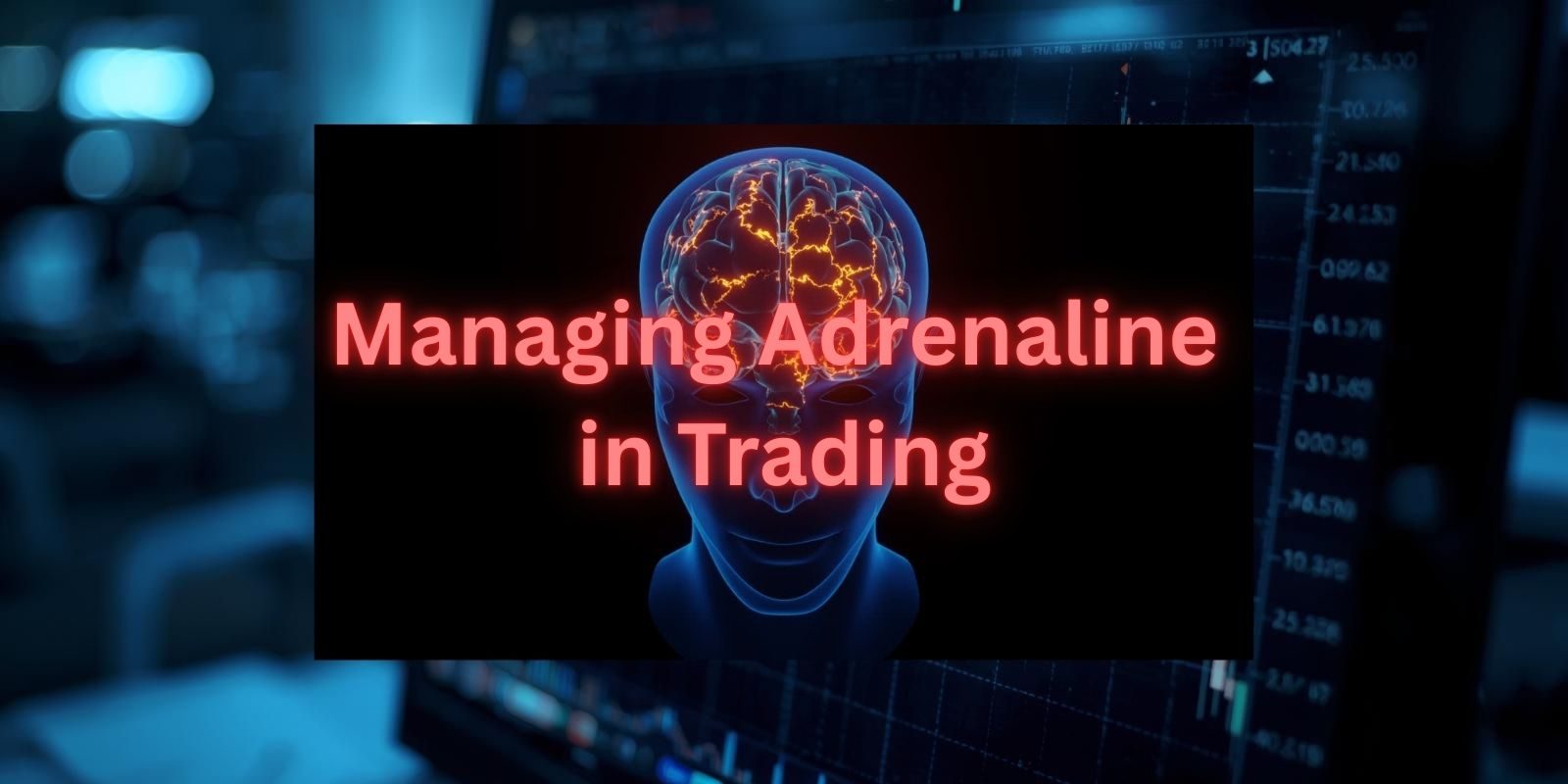
Managing Adrenaline in Trading
The Chemical Surge Behind the Cursor
It begins the moment a high-stakes trade is entered. Your heart rate spikes, your breathing becomes shallow, and you feel a sudden, electric jolt through your nervous system. This is a surge of epinephrine, more commonly known as adrenaline. While this survival mechanism kept our ancestors alive in the wild, it can be a significant obstacle to objective decision-making in the markets. To achieve long-term consistency, Managing Adrenaline in Trading must be treated as a core technical skill, just as important as reading a candlestick chart.
Adrenaline prepares the body for “fight or flight,” but trading requires a calm, analytical state. When you are under the influence of a chemical “rush,” your brain’s logic centers are partially bypassed in favor of instinctive reactions. This leads to common errors like “panic selling” or “fomo entries.” This post will explore how to identify these surges and provide a framework for Managing Adrenaline in Trading so you can remain the pilot of your performance rather than a passenger to your biology.
The Neurobiology of the Trading “Rush”
When you perceive risk, your hypothalamus signals your adrenal glands to flood your system. This increases your heart rate and redirects oxygenated blood to your limbs. While this makes you faster and stronger physically, it “starves” the Prefrontal Cortex—the part of the brain responsible for complex math and sticking to a plan. Managing Adrenaline in Trading is essentially the act of keeping your Prefrontal Cortex “online” while your body is trying to prepare for a battle.
The danger of this chemical state is that it distorts your perception of time and probability. A five-minute candle can feel like an hour, and a minor price fluctuation can feel like a catastrophe. By Managing Adrenaline in Trading, you learn to recognize these distortions for what they are: biological static. To trade professionally, you must cultivate a “biological baseline” where your heart rate remains steady regardless of whether the P&L is green or red.
Tactical Steps for Managing Adrenaline in Trading
You cannot simply “will” yourself to be calm once adrenaline is in your bloodstream. You must use physical and systematic tools to neutralize it.
1. The Physiological Override
The fastest way to signal your brain that you are safe is through the breath. Using the 4-7-8 breathing technique (inhale for 4, hold for 7, exhale for 8) stimulates the Vagus nerve. This physically forces your heart rate down and is a non-negotiable tool for Managing Adrenaline in Trading during high-volatility events.
2. Radical Position Sizing
If every trade causes a massive adrenaline spike, your position size is likely too large for your current psychological “bandwidth.” To assist in Managing Adrenaline in Trading, you should lower your risk until the physical “rush” disappears. You can then scale up slowly, allowing your nervous system to habituate to larger numbers without triggering a survival response.
Conclusion: Mastering the Animal Within
Trading is a performance sport played within the nervous system. Managing Adrenaline in Trading is not about becoming a robot; it is about becoming a master of your own biology. By understanding the chemical nature of the “rush” and implementing physiological circuit breakers, you protect your capital and your long-term success.
To see how these biological principles impact your execution, watch our YT Video on Adrenaline in Trading, here: https://youtu.be/tOoxJLU19w8.
More on Trading Psychology
Take the Trader Personality Test
Read:
Psychological Traits of Top Traders: 8 Key Traits You Need to Succeed
10 Essential Skills Every Profitable Trader Must Master
Top 12 Habits of Successful Traders
How to Get Started Trading Options
Disclaimer: This content is provided for educational and informational purposes only. It does not constitute, and should not be relied upon as, personalized investment advice, a recommendation to buy or sell any security, or an offer to participate in any trading activity. Trading involves substantial risk, and past performance is not indicative of future results.